In-depth guide
Six Ways of Loving: A Guide to the Love Styles Model
Passion, play, friendship, good sense, longing and devotion: what the six love styles mean, what research says about them, and how to talk about yours.
By TraitLume Editorial9 min read
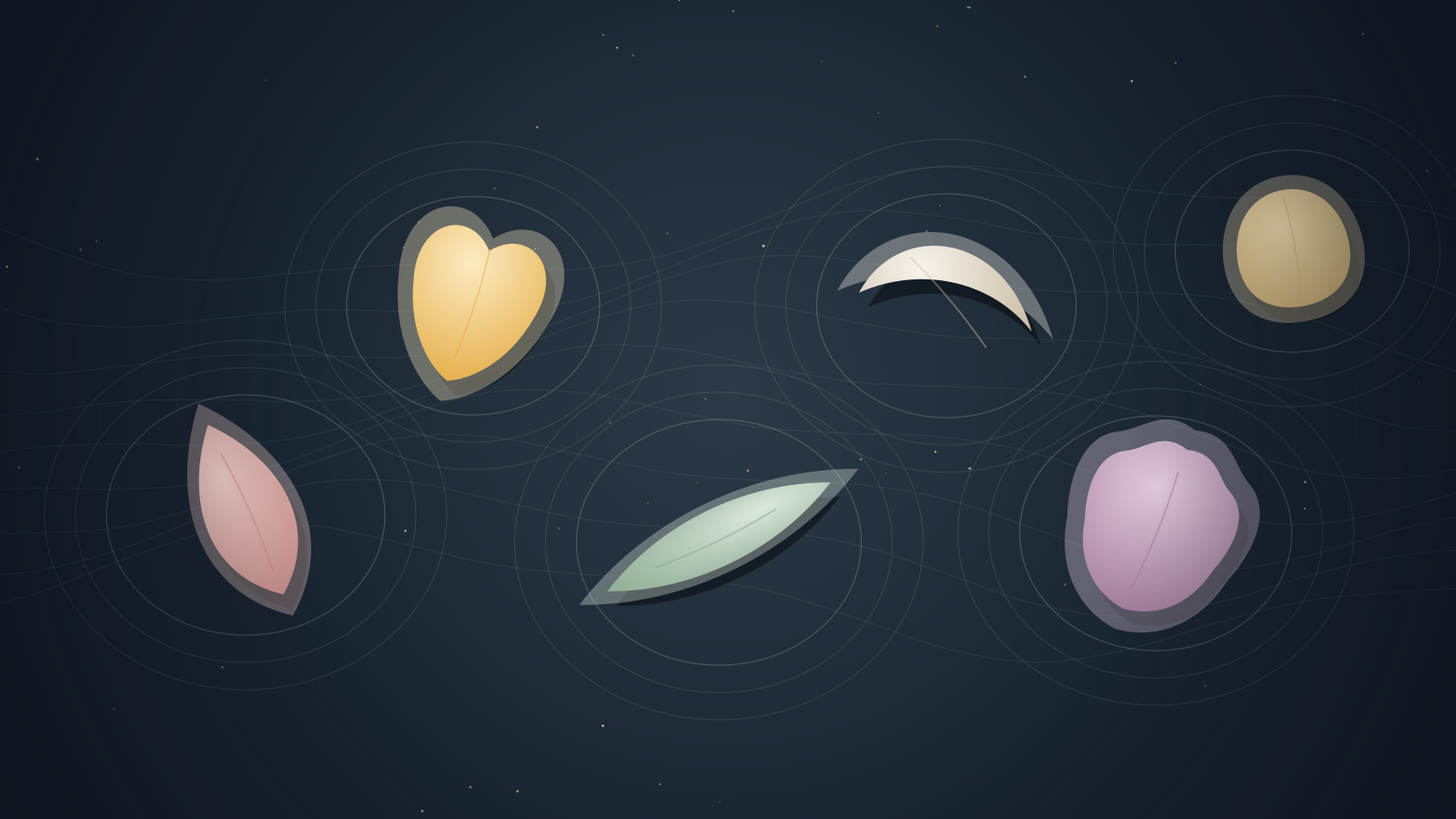
Ask ten people what love feels like and you will get ten different answers. One person remembers a first glance that changed everything. Another cannot say when a long friendship turned into something more. One loves lightly and freely, one plans carefully, one aches with worry, and one gives without counting.
None of them is wrong. They are describing different ways of loving. This guide walks through one of the best-known models of those differences, the six love styles, covering where it came from, what each style looks like, what research says and how to use your profile to talk with the people you love. It does not tell you who to love or whether a relationship will last. No questionnaire can.
Where the six styles come from
In the early 1970s the Canadian sociologist John Alan Lee interviewed people about their experiences of love and read descriptions of love across centuries of literature. Instead of one ladder running from "less" to "more" love, he found distinct styles. He described them with an artist's color wheel. Three were primary, like red, yellow and blue, and three were mixtures of the primaries. He named them with old Greek and Latin words: eros, ludus and storge as the primaries, and mania, pragma and agape as the blends. He set the idea out in his 1973 book Colours of Love.
In the 1980s the psychologists Clyde and Susan Hendrick turned Lee's ideas into a questionnaire, the Love Attitudes Scale, and studied large numbers of people with it. They treated the six styles as attitudes that everyone holds to some degree, not as six boxes that sort people, and their data supported that view. Later they published a shorter version of the scale, and the model has since been studied in many countries, in couples and single people, and alongside attachment, personality and satisfaction.
The six ways, one at a time
TraitLume's test uses everyday names for each style, with Lee's original word in brackets. Every style has a gift and an edge.
Ardent love (Eros)
Love as passion. Ardent lovers often feel attraction quickly, value physical closeness and emotional intensity, and want the sense of having found someone special. The gift: vividness and wholehearted commitment. The edge: early intensity can blur your view of the actual person, and the calmer seasons of a long relationship can feel like loss when they are really another kind of love.
Playful love (Ludus)
Love as play. Playful lovers enjoy flirting, the chase and the freedom of keeping things light. They may hold back how much they care and recover from endings fairly quickly. The gift: fun, lightness and resilience. The edge: a partner may never be sure where they stand. In the original research, ludus also covered keeping more than one romance going at once; TraitLume's test deliberately focuses on lightness and freedom rather than deception.
Kindred love (Storge)
Love as deep friendship. Kindred lovers trust love that grows slowly out of shared time, easy companionship and trust built over months or years. The gift: steadiness and warmth that are easy to live with day to day. The edge: romance can come to feel optional, and a partner who needs passion and novelty may feel taken for granted.
Grounded love (Pragma)
Love as a wise choice. Grounded lovers ask whether a partner's values, plans, family and practical life fit with their own, and they choose with the head as well as the heart. Many cultures honor this approach, especially where families take part in partner choice. The gift: stability and shared direction. The edge: evaluation can crowd out tenderness, and a partner may feel assessed rather than cherished.
Longing love (Mania)
Love as intense longing. When someone matters, they fill your thoughts, your mood rises and falls with the relationship, and worry about being loved back, including jealousy, can run high. Literature is full of this style: Majnun wandering the desert for Layla in Nizami's poem, Goethe's Werther unable to live without Charlotte. Those stories are beautiful, and they are also warnings. The gift: devotion and deep attentiveness. The edge: worry is exhausting for both people, and it can push away the person you most want close.
Giving love (Agape)
Love as devotion. Giving lovers put the good of the person they love first, give without keeping score, forgive readily and would make real sacrifices. The gift: rare generosity. The edge: you may give until you are empty, or stay with someone who takes much more than they give. Caring for yourself is what lets this kind of love last.
A profile, not a box
Three points from the research are worth keeping in mind as you read any love-style result.
Most people blend styles. It is common to be both ardent and kindred, looking for passion and a best friend in the same person, or grounded and giving. Your leading style is the loudest color, not the only one.
Styles can change. Love styles appear fairly stable over months, but they respond to life. A new partner, a long and happy relationship, a painful breakup or a new stage of life can all shift the blend. A result is a portrait of how you love now.
You do not need a partner to have a profile. Single people can answer for how they tend to feel when someone begins to matter. Someone for whom romance is simply not central right now may show no strong style at all, and that is a real and valid result, not a failure to love.
What research says about love styles and satisfaction
The evidence for the model is best described as moderate. The six-style structure has held up across many studies, and some links with relationship satisfaction are fairly consistent.
- Passion tends to go with satisfaction. In a study of dating couples, Susan Hendrick, Clyde Hendrick and Nancy Adler found that eros was linked with higher satisfaction and ludus with lower satisfaction, and couples who stayed together tended to score higher on eros and lower on ludus at the start. Later work has often found similar, though weaker and less consistent, links for agape and storge.
- Playful and longing love tend to go with lower satisfaction, on average. For ludus, the uncertainty is a likely reason. For mania, the worry and jealousy are hard on both people.
- Partners are somewhat similar, but similarity predicts little. Couples often resemble each other a little in love styles, but how alike two people are says much less about a relationship than how they treat each other every day.
- Measurement is not equally strong everywhere. Some of the six scales show weaker reliability in some languages and samples. Results describe tendencies, not destinies.
These are averages across many people. They cannot tell you anything certain about your relationship. That is also why TraitLume never shows a compatibility percentage or a "match score": the science does not support one, and a number would invite people to judge a living relationship by a test.
Longing, worry and when to get support
If your profile shows strong longing, know first that it is not a diagnosis and not a character flaw. It often reflects how much love means to you.
It does overlap with what psychologists call attachment anxiety, an inner alarm that sounds whenever closeness feels uncertain. In 1988 the researchers Levy and Davis compared the two models directly and found that mania lined up with anxious attachment, while eros and agape lined up more with secure attachment. If this part of your profile resonates, our Attachment Style test and our guide to attachment styles can add depth.
Some things that help the alarm settle:
- Pause before you reach. When worry spikes, breathe and ask, "What do I actually know right now?"
- Ask once, clearly and warmly. Replace hints or tests with a direct request: "A quick message tonight would help me relax."
- Widen your circle of safety. Friends, interests and routines mean that one person does not carry your whole sense of security.
- Let calm count as chemistry. A partner who is reliable over time is offering something precious, even if it feels less dramatic.
If jealousy, fear or longing feels heavy, starts affecting your sleep or work, or is hard to manage, a qualified therapist or counselor can help, and talking to your doctor is a good first step.
Intensity is a feeling; control is a behavior
It matters to separate strong feelings from harmful actions. Feeling jealous is human. Checking a partner's phone, demanding passwords, tracking where they go, cutting them off from friends or family, or using threats or intimidation are not love styles, and they are not proof of how much someone cares.
If you recognize these behaviors in a partner and you feel afraid, controlled or unsafe, it is not your fault, and it is not something a better love style will fix. Please reach out to someone you trust or a local domestic-abuse helpline or support service, and contact your local emergency number if you are in immediate danger. If you notice yourself sliding toward controlling behavior, that is a sign to seek support from a professional, not something to manage alone.
Using your result with someone you love
A shared language for love styles can turn old arguments into curiosity. Instead of "you never make an effort", it becomes "I think I lean ardent and you lean kindred; maybe we show love differently."
A few conversation starters:
- "When did you first feel that you loved me, and what made you sure?"
- "What makes you feel most cared for: a surprise, a plan, time together or help with something hard?"
- "When do you feel most secure with me, and when do you feel unsure?"
Some combinations reliably need patience. A high longing style meeting a high playful style can create a loop where one person pursues and the other retreats. Spark-seeking ardent love meeting slow-warming kindred love can feel like a mismatch of timing rather than of feeling. Head-first grounded love meeting heart-first love may disagree about when to talk about money or children. None of these is a verdict. Each is an invitation to explain what you need.
Two ground rules keep this safe. First, share only if you both want to. Second, never use a result as evidence in an argument ("the test says you are a player"). A profile is a starting point for understanding, not a weapon.
Try it
If you are curious about your own blend, the Six Ways of Loving test takes about six minutes and is for adults (18+). You will see your leading style, your full profile across all six, the gifts and blind spots of each, and practical ways to love more freely and wisely, whether you are single or partnered. Your results stay private unless you choose to share them.
Sources
- Lee, J. A. (1973). Colours of Love: An Exploration of the Ways of Loving. New Press.
- Hendrick, C., & Hendrick, S. (1986). A theory and method of love. Journal of Personality and Social Psychology, 50(2), 392–402. https://doi.org/10.1037/0022-3514.50.2.392
- Hendrick, S. S., Hendrick, C., & Adler, N. L. (1988). Romantic relationships: Love, satisfaction, and staying together. Journal of Personality and Social Psychology, 54(6), 980–988. https://doi.org/10.1037/0022-3514.54.6.980
- Levy, M. B., & Davis, K. E. (1988). Lovestyles and attachment styles compared: Their relations to each other and to various relationship characteristics. Journal of Social and Personal Relationships, 5(4), 439–471.
- Hendrick, C., Hendrick, S. S., & Dicke, A. (1998). The Love Attitudes Scale: Short form. Journal of Social and Personal Relationships, 15(2), 147–159. https://doi.org/10.1177/0265407598152001
Topics
- love styles
- relationships
- eros and storge
- romantic love